Insecurity: 31 states spend N252bn on security in six months
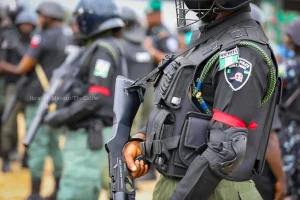
No fewer than 31 state governments spent an estimated N252.26bn to fight criminality and eliminate insecurity in their respective states in the first six months of 2026, with Kogi, Plateau and Bauchi accounting for the largest share, despite the continued killings, kidnappings and banditry recorded across the country.
An analysis of the fiscal performance of each state, utilising data from the Q1 to Q2 budget performance reports from January to June 2026 obtained from Open Nigerian States, a budgIT-backed website that serves as a repository of government budget data, on Sunday, showed that Kogi topped the table with N34.67bn, representing 13.74 per cent of the total expenditure captured in the data. Plateau followed with N23.69bn, or 9.39 per cent, while Bauchi spent N22.35bn, representing 8.86 per cent.
The states which recorded security-related expenditure include Abia, Adamawa, Anambra, Bauchi, Bayelsa, Benue, Borno, Cross River, Delta, Ebonyi, Ekiti, Enugu, Gombe, Imo, Jigawa, Kaduna, Kano, Katsina, Kebbi, Kogi, Kwara, Lagos, Nasarawa, Niger, Ogun, Ondo, Oyo, Plateau, Sokoto, Taraba and Zamfara, while Akwa Ibom, Edo, Osun, Rivers and Yobe recorded no expenditure in the listed categories.
The figures cover spending on security equipment, homeland security personnel, security votes and operations, ministries of security or special advisers, and security trust funds.
It showed that state-level spending rose sharply in the latest data, with the combined expenditure across the states covered increasing by N176.42bn, or 232.6 per cent, from N75.84bn in 2025 to N252.26bn.
But based on a year-on-year comparison of states with available data, the figures you supplied show that 22 states spent approximately N144.44bn in 2026, compared with N75.84bn in 2025. That is an increase of approximately N68.61bn, or 90.5 per cent.
The figures highlight the efforts by sub-nationals as they deploy resources to complement federal security efforts and respond to threats within their territories.
The comparison, however, is based on the 22 states for which 2025 figures were supplied. The latest data contains figures for more states, so the overall comparison is not a like-for-like 36-state comparison.
On the categories of spending, security equipment expenditure was N37.08bn, while spending on homeland security personnel reached N26.89bn.
Security votes and related homeland security expenditure climbed from N47.67bn to N135.61bn, representing an increase of N87.94bn or 184.5 per cent. Expenditure under ministries of security and special advisers rose from N14.95bn to N42.15bn, up N27.20bn or 181.9 per cent.
Security trust fund spending also increased from N6.82bn to N10.53bn, representing a rise of N3.71bn or 54.4 per cent.
The spending came against the backdrop of persistent insecurity across the country, including killings, kidnappings, banditry, terrorism and communal violence.
The National Human Rights Commission said its Human Rights Observatory documented 651 kidnapping incidents and 492 killings between January and March 2026, with the North-Central, North-West and North-East among the worst affected regions.
The security situation remained severe into the second quarter. A report by SARI Global obtained by The PUNCH showed that 792 people were killed in 882 security incidents across the 36 states and the Federal Capital Territory in June alone.
The data also showed that military and other security agencies conducted about 14,000 operations in the first half of the year, killing 1,597 terrorists and insurgents and rescuing 1,516 kidnapped victims, according to official mid-year operational figures.
The wide gap between security expenditure and security outcomes has therefore continued to raise questions about the effectiveness, transparency and coordination of security spending at both the federal and state levels.
Kogi’s N34.67bn was the highest among the states listed, accounting for 13.74 per cent of the total. It spent N10.98bn more than Plateau, the second-highest spender, and N12.31bn more than Bauchi.
Plateau’s N23.69bn accounted for 9.39 per cent of the total, while Bauchi’s N22.35bn represented 8.86 per cent.
Combined, the three states spent about N80.70bn, accounting for 32.0 per cent of all the security-related expenditure captured in the data.
The figures are particularly significant because all three states have experienced varying degrees of security challenges, including attacks by armed groups, communal violence, banditry and kidnapping.
Bayelsa ranked fourth with N17.49bn, representing 6.93 per cent of the total. Its spending was N17.18bn lower than Kogi’s.