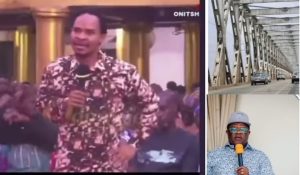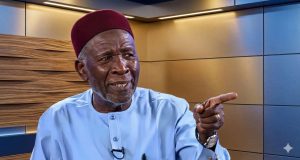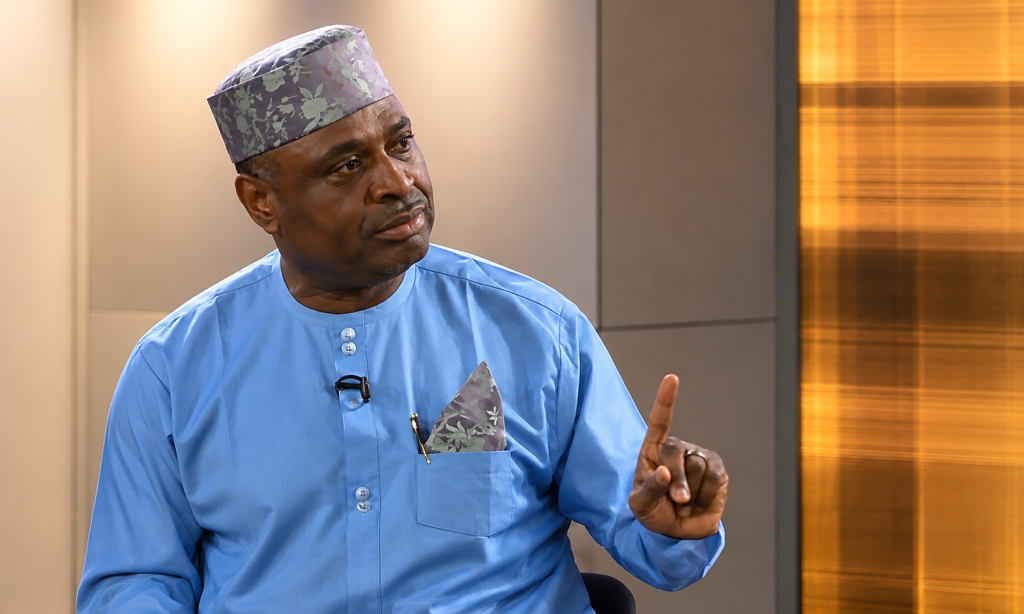
Kenneth Okonkwo accuses Taiwo Oyedele of lying over fuel discount
Lawyer and actor Kenneth Okonkwo has accused Taiwo Oyedele of lying over the Federal Government’s 30-day petrol discount policy, insisting that the intervention amounts to a form of fuel subsidy.
Okonkwo made the allegation during a discussion on Channels Television, where he questioned the government’s decision to describe the temporary reduction in petrol prices as a discount rather than a subsidy.
Speaking during the programme, Okonkwo argued that the policy met the definition of a subsidy because it was designed to reduce the cost of petrol and provide relief to Nigerians.
He said, “Now, what is subsidy? Subsidy is defined as a financial aid or support typically provided by a government or organisation and given to an individual or business or institution or industry to reduce cost or promote social or economic goals.”
According to him, the government’s decision to reduce petrol prices from about ₦1,500 to ₦1,350 per litre demonstrated that the intervention was intended to ease the financial burden on consumers.
“What were they trying to do? They were trying to reduce cost. They acknowledged by themselves that the cost was becoming unbearable for the people and they have to intervene to give relief for the people,” he said.
Okonkwo faulted the government’s position that the measure did not amount to a return of fuel subsidy, arguing that its purpose was consistent with the definition of subsidy.
“And they say it’s not subsidy. Then the whole idea of subsidy has to be redefined. Because what he did is exactly the definition of subsidy,” he added.
The lawyer subsequently accused Oyedele of dishonesty over his explanation of the policy.
“Sorry to say this, Taiwo Oyedele lied when he said it was not subsidy. It was subsidy,” Okonkwo said.
He also alleged that the government was reluctant to acknowledge the intervention as a subsidy because it had repeatedly maintained that it would not restore the petroleum subsidy.
According to Okonkwo, the administration’s position was an attempt to avoid admitting that it had adopted a measure aimed at cushioning the impact of rising petrol prices.
He also referenced former Vice-President Atiku Abubakar’s position on the matter, saying the former presidential candidate had urged the government to adopt measures that would ease the burden on Nigerians, regardless of the name given to them.
Okonkwo illustrated his criticism with an examination analogy, suggesting that the government had borrowed an idea but was struggling to implement it consistently.
“In the examination hall, when you are copying the answer of your fellow classmate, you will always copy even the words you should not copy,” he said.
He added that the government’s attempt to distance the petrol discount from subsidy had resulted in confusion over the policy.
The remarks add to the debate surrounding the Federal Government’s temporary petrol discount and whether the intervention should be regarded as a form of subsidy or a separate relief measure.
Okonkwo’s description of Oyedele’s position as a lie was an allegation made during the television discussion, while his argument that the discount constitutes a subsidy reflects his interpretation of the policy.