Tinubu receives UN’s proposed $14bn 2027 budget in historic first
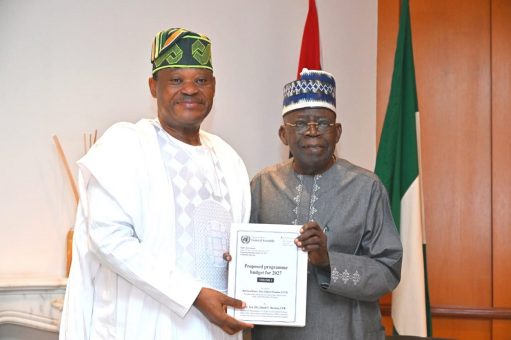
President Bola Ahmed Tinubu on Sunday evening received the United Nations’ proposed $14 billion budget for 2027, marking what Nigeria’s Permanent Representative to the global body, Senator Jimoh Ibrahim, described as a historic milestone in the country’s 66 years of membership of the organisation.
The seven-volume budget document was presented to the President at the his official residence in the State House, Abuja, by Ibrahim, who currently chairs the United Nations General Assembly’s Fifth Committee on Administrative and Budgetary Matters.
Speaking with journalists after meeting with the President, the Nigerian envoy explained that the presentation was particularly significant because it was the first time since Nigeria joined the United Nations in 1960 that its representative would preside over the committee responsible for considering the organisation’s budget.
Ibrahim said the proposed budget, which was formally presented to the committee by the United Nations Secretary-General, António Guterres, represented an important responsibility for Nigeria in the management of the global body’s financial and administrative affairs.
According to him, the historic position occupied by Nigeria made it necessary to formally present the budget documents to President Tinubu, who represents the country at the highest level of government.
He explained that the budget, contained in seven volumes, covered the organisation’s regular expenditure, peacekeeping operations and other financial commitments.
The envoy put the overall proposed expenditure at approximately $14 billion, describing the financial responsibilities involved as substantial.
He said the regular budget was estimated at about $3.4 billion, while approximately $8.5 billion was earmarked for peacekeeping operations.
Ibrahim described Nigeria’s chairmanship of the influential UN committee as a rare diplomatic achievement, stressing that the country could not predict when another opportunity of such significance would arise.
He said the development had also placed President Tinubu in a historic position as the first Nigerian leader to formally receive the proposed UN budget from a Nigerian representative serving as chairman of the committee.
“We don’t know when we’re going to do that again in history”, he said, reflecting on the significance of Nigeria’s leadership of the committee.
The ambassador expressed satisfaction that the President had received the seven volumes of the proposed budget, noting that the occasion underscored Nigeria’s growing participation in critical decisions affecting the operations of the United Nations.
Asked what Nigeria stood to benefit from its influential position in the UN budgetary process, Ibrahim declined to disclose specific expectations, explaining that negotiations among member states were still ongoing.
He maintained that it would be premature to discuss possible financial or developmental benefits for Nigeria when the proposed allocations had yet to receive the necessary approvals.
The envoy stressed that the budget remained a proposal subject to detailed scrutiny, adjustments and negotiations by members of the Fifth Committee before its eventual consideration and approval by the General Assembly.
“The budget still has to be approved. It’s a proposed budget”, he said.
He explained that the figures contained in the documents could still change during negotiations, adding that expenditure would only commence after the required approval processes had been concluded.
Illustrating the scale of projects funded through the United Nations system, Ibrahim cited the construction of a conference facility in Nairobi, Kenya, estimated at about $260 million.