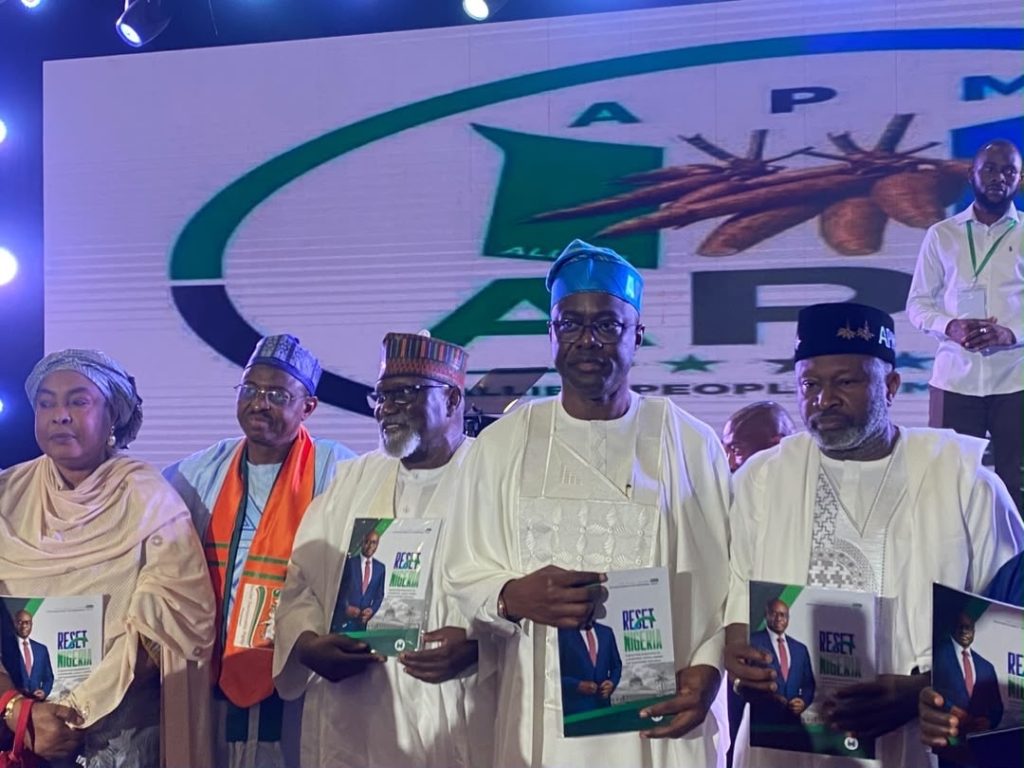
Makinde unveils manifesto, proposes 51% votes for election of president
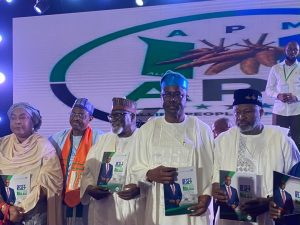
The Allied Peoples Movement (APM) presidential candidate and Oyo State Governor, Seyi Makinde, has proposed a major overhaul of Nigeria’s electoral system to ensure that no presidential candidate emerges victorious without securing at least 50 per cent plus one of the total votes cast, as he unveiled his manifesto for the 2027 general election with a pledge to run a four-year transitional government of national unity.
Makinde, who unveiled his Reset Nigeria Agenda in Abuja, yesterday, said Nigeria’s greatest challenge was not a lack of natural or human resources but a shortage of ideas among those entrusted with leadership, insisting that successive governments had failed to translate the country’s enormous potential into improved living conditions for ordinary citizens.
The governor, who promised to devote his four-year tenure, if elected, to economic recovery, security reforms, institutional strengthening and socio-political restructuring, said his administration would pursue a fundamental reset of the country through broad national consultations, constitutional reforms and policies designed to reduce the cost of living, create jobs and restore public confidence in government.
He argued that Nigeria’s current electoral arrangement, which allows a presidential candidate to emerge without securing an absolute majority of votes cast, had contributed to political instability, encouraged post-election compromises and weakened democratic institutions, stressing that a president should command the support of a clear majority of the electorate.
Makinde said his proposed electoral reform would not abolish the existing multi-party system but would compel political parties and presidential candidates to build broader national consensus across ethnic, religious, regional and political divisions before assuming office.
According to him, the proposal forms part of a wider national conversation on the future of Nigeria’s political and constitutional arrangements, which his proposed transitional government would facilitate without seeking to benefit from the outcome.
“My personal opinion, which is something we will have a conversation about, is that our diversity should become a source of strength and unity for Nigeria rather than a source of division. Ideally, the presidential system works best with a two-party structure. However, we currently operate a multi-party system, and people may want the opportunity to pursue their political ambitions independently. Therefore, I am not going to interfere with the multi-party arrangement we currently have.
“However, I believe that anyone aspiring to become President of Nigeria should not emerge with less than 33 per cent of the votes in a system where the remaining voters may have voted against them. When someone emerges under such circumstances, they may enter government and begin compromising the political system itself. They may start asking other political actors to bring the mandates they received from their supporters to join the government.
“Where those political actors resist, they may be subjected to pressure. They did that to Governor Bala and myself. Rather, we insist on standing on the side of the Nigerian people. What we are proposing is that, to become President of Nigeria, a candidate must secure at least 50 per cent plus one vote.
“That way, candidates and political parties will have to engage in discussions across party lines and other divisions to secure the support needed to form a government that commands the respect of the majority of Nigerians. That is why the proposal under our Reset Agenda is to establish a transitional government of national unity.”
The APM standard-bearer said he was prepared to sacrifice any personal political advantage that might arise from the proposed constitutional restructuring, declaring that he would not seek to become a beneficiary of the political arrangements developed under his administration.
“Today, Wednesday, November 4, 2026, I offer myself as a guinea pig by announcing to Nigerians that whatever constitutional and political arrangements we eventually develop, I will not be a beneficiary. If I intend to benefit personally from the arrangements, there is a possibility that manipulation could set in. But I do not want that to happen.”
Turning to the economy, Makinde said Nigeria was endowed with abundant natural resources, a large population and considerable human capital but had continued to struggle with poverty, unemployment, rising production costs and declining purchasing power because successive leaders had failed to develop workable solutions to the country’s problems.
“Nigeria has the resources and the capacity to achieve greatness. Nigeria is rich in natural resources and human resources, but our leaders are poor in ideas.
“Our simple proposition is that government must make life easier for the people. That is all,” he declared.
The governor explained that his manifesto was developed following extensive consultations with Nigerians across the six geopolitical zones, including town hall meetings at which citizens were asked to identify their priorities and describe the kind of country they wanted.
He said the Reset Nigeria Agenda was anchored on the conviction that every Nigerian deserved to live in safety, earn a decent living, access opportunities and develop their abilities, while economic growth and government reforms must produce measurable improvements in the welfare of citizens.
Makinde identified four fundamental concerns behind his presidential ambition, including the failure of macroeconomic reforms to improve household welfare, weak public institutions, widespread poverty and the inability of government policies to deliver tangible benefits to the population.
He argued that macroeconomic stability should not be celebrated merely on the strength of economic statistics when millions of Nigerians continued to struggle with food prices, unemployment, inadequate incomes and the rising cost of essential goods and services.
According to him, the success of economic reforms must be measured by their impact on ordinary Nigerians, particularly their ability to afford food, secure employment, run profitable businesses and maintain a reasonable standard of living.
He said his economic programme would focus on addressing the structural factors responsible for the high cost of living, particularly expensive energy, poor infrastructure and the unfavourable operating environment confronting manufacturers and other businesses.
“Our economic agenda focuses on reducing the structural cost of living. We must lower the cost of production and enable Nigerian businesses to become competitive. For instance, no matter how hard I try, a manufacturer who relies on generators powered by diesel will continue to incur high production costs.
“We must make it possible for manufacturers to connect to the national electricity grid and access electricity at a lower cost. Of course, the cost of energy remains a major burden on businesses. We export plastics and many other products to the Republic of Benin. Today, some businesses are leaving Nigeria because our operating environment is not competitive enough.”
The presidential candidate maintained that Nigeria could not build a competitive manufacturing sector or create sufficient employment opportunities while businesses continued to depend heavily on expensive alternative sources of electricity.
He said reducing energy costs, improving infrastructure and creating a more predictable business environment would be central to his administration’s efforts to encourage investment, expand domestic production and strengthen the country’s competitiveness.
Makinde also questioned the impact of petroleum pricing on ordinary Nigerians, particularly why increases in international crude oil prices should translate into additional hardship for citizens without corresponding benefits from the country’s status as an oil-producing nation.
He insisted that economic policies must be designed and implemented with the welfare of the population as their primary consideration rather than leaving households and businesses to absorb rising costs without adequate relief.
The governor also took a swipe at President Bola Tinubu’s administration over the country’s persistent electricity crisis, accusing the Federal Government of failing to fulfil its promise to improve power supply while attempting to shift responsibility to state governments.
He recalled that Tinubu had publicly linked his administration’s electoral fortunes to its ability to address the electricity challenge and urged Nigerians to hold the President accountable for that commitment.
“We must hold those in government accountable for their promises. This administration made several promises. We all remember when they said that if they failed to fix electricity, Nigerians should not vote for them again. For God’s sake, Nigerians must hold them accountable to that statement because they have not provided reliable electricity. Instead, they shift the blame, saying they have given states the autonomy to regulate the electricity market within their jurisdictions.
“Yes, but should a baby that has just been born start crawling, walking and running at the same time? They signed the electricity autonomy and regulation bill in 2023. It is now three years. The intention was to encourage states to develop their electricity markets. Of course, different states have different capacities and circumstances. However, you cannot simply shift the blame. You have national electricity assets, and you must manage them properly. You cannot abandon your responsibility and blame the states.”
Makinde said granting states greater regulatory powers over electricity did not absolve the Federal Government of its responsibility to manage national electricity infrastructure and ensure that the country’s power sector functioned effectively.
He maintained that the different capacities of states to develop their electricity markets made it necessary for the Federal Government to provide effective leadership and coordination rather than treating decentralisation as an excuse for persistent failures.
On governance and accountability, the APM presidential candidate promised that his administration would introduce measurable performance targets within its first 100 days in office and subject its achievements to public scrutiny.