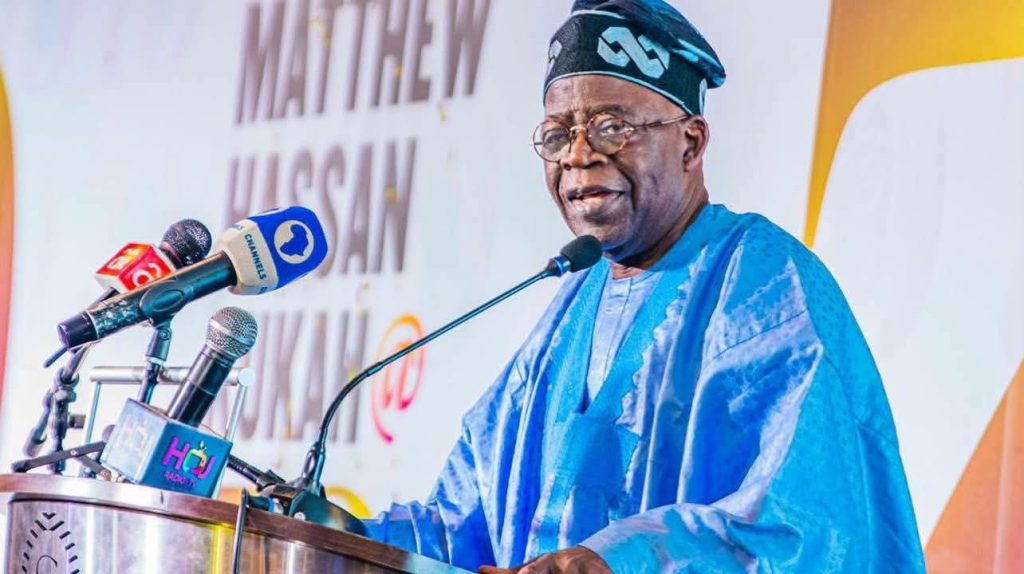
Tinubu overrules EFCC on Osun
President Bola Tinubu’s directive to the Economic and Financial Crimes Commission (EFCC) to withdraw its court-backed order freezing the accounts of the Osun State Government has triggered a wider debate over the balance between anti-corruption enforcement, electoral neutrality, and the independence of Nigeria’s law enforcement institutions.
The President, in a statement personally signed yesterday, said he was not questioning the authority of the EFCC to investigate alleged financial misconduct or seek judicial orders where necessary. However, he expressed concern that the timing of the agency’s action, coming only days before the Osun State governorship election, could undermine public confidence in the electoral process.
Tinubu said he was “deeply embarrassed” not by the EFCC’s exercise of its mandate, which was backed by a court order, but by the timing of the action.
“I must state that I feel deeply embarrassed not by the EFCC’s exercise of its mandate backed by a court order, but by the timing of the agency’s action,” the President said.
According to him, anti-corruption and law enforcement institutions must be allowed to operate independently and within the law, stressing that strong institutions remain essential to democratic governance.
However, he said government agencies must also consider the wider implications of their actions, particularly during sensitive electoral periods.
The President noted that actions taken by federal institutions close to elections could create perceptions of political interference, regardless of the intention behind them.
“Osun State is only a few days away from its gubernatorial election. Therefore, nothing ought to be done to give an impression that the EFCC or indeed any other agency of the federal government is being used to interfere with the election,” he stated.
Tinubu said he had not been fully briefed on all the circumstances surrounding the EFCC’s decision to obtain the order restricting access to the state government accounts. Nevertheless, he said the overriding public interest in protecting confidence in Nigeria’s democratic process informed his intervention.
He subsequently directed the EFCC to return to court and seek the withdrawal of the order.
“Accordingly, I have directed the EFCC to immediately proceed to the court to vacate the order and discontinue whatever action it has instituted against the Osun State Government in this regard,” he said.
The intervention has since generated fresh arguments over whether the President’s action strengthens confidence in the electoral process or raises further questions about the operational independence of anti-corruption agencies.
The EFCC has defended its decision, insisting that the freezing of accounts linked to high-profile investigations is a routine legal measure and not politically motivated.
The commission’s Director of Public Affairs, Wilson Uwujaren, said the action against Osun was carried out within the agency’s mandate and was not targeted at any particular government.
Speaking on Arise Television’s Morning Show, Uwujaren said the EFCC had taken similar steps in previous cases where investigators identified suspicious financial transactions.
He cited the Edo State governorship transition as an example, stating that the commission restricted access to certain accounts before Governor Monday Okpebholo assumed office because investigators detected suspicious transfers.
According to him, the intervention helped preserve about N12 billion for the incoming administration.