Cardoso: Naira needs competition, not protection
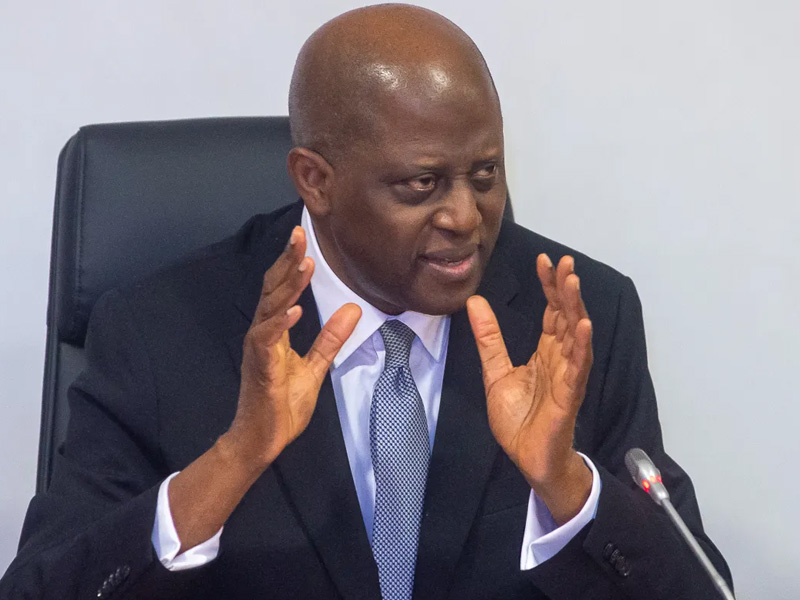
Governor, Central Bank of Nigeria (CBN), Olayemi Cardoso, has stated that the naira must remain market-driven and competitive rather than being artificially supported.
This comes as the Monetary Policy Committee (MPC) of the CBN kept interest rates unchanged and reaffirmed their commitment to bringing inflation into single digits despite mounting geopolitical risks.
Cardoso’s remarks came after the International Monetary Fund (IMF) had said last month that the naira remains significantly undervalued despite recent gains against the United States dollar across official and parallel foreign exchange markets.
In its assessment of Nigeria’s economy, the Washington-based lender said the naira is trading about 25.6 per cent below its value based on the country’s economic fundamentals, even after recording a notable recovery following sweeping foreign exchange reforms introduced by the Federal Government.
Defending the CBN’s exchange-rate reforms, Cardoso, while fielding questions from newsmen after the end of the MPC meeting in Abuja on Tuesday, said the apex bank remained committed to a transparent, liquid foreign exchange market driven by willing buyers and willing sellers. “Our view is one of continuing on the path that we have embarked on, and that is to ensure that we have a market that is transparent, that is liquid, and one that has willing buyer, willing seller.
Briefing newsmen on the outcome of the MPC meeting, Cardoso said that the committee left the Monetary Policy Rate (MPR) at 26.5 per cent, while retaining the asymmetric corridor around the benchmark rate at +50/-450 basis points. He added that the committee also maintained the Cash Reserve Ratio (CRR) at 45 per cent for deposit money banks and 16 per cent for merchant banks, retained the 75 per cent CRR on non-Treasury Single Account public sector deposits and left the liquidity ratio unchanged at 30 per cent.
He acknowledged that the conflict in the Middle East had delayed the pace of disinflation the central bank had anticipated, but insisted that the CBN remains committed to restoring price stability.
The Committee projected that inflation would continue to moderate over the medium term, supported by exchange-rate stability, the lagged impact of previous monetary tightening and improved food supply during the harvest season. However, it warned that a prolonged escalation of the Middle East conflict remained the biggest risk to the outlook.
Highlighting improvements in broader macroeconomic indicators, Cardoso said Nigeria’s gross external reserves rose to $52.52 billion as of July 17 from $50.47 billion at the end of May, enough to cover about 11 months of imports, while the Purchasing Managers’ Index (PMI) returned to expansion territory at 50.1 in June.
While stating that the recent decline in bank lending is temporary, Cardoso attributed this to the withdrawal of COVID-era regulatory forbearance, banks restructuring their loan portfolios and ongoing capital strengthening following recapitalisation.
He maintained that lending should recover as banks complete the transition.
The Governor thereafter reiterated that existing banknotes and coins remain legal tender. According to him, the limited circulation of lower denominations reflects reduced demand as digital payments have become more widespread.
“The question as to why we do not have as many of them in circulation as may be perceived that some would want is a question of demand and supply. Quite frankly, where the ecosystem is moving as indeed we wanted to move to one of financial inclusion, where digitisation is becoming increasingly important to many. So, if there is no need for coins or for lesser denominations.
We set ourselves a very ambitious goal to increase. increase financial inclusion in the next two years. Hence, the CBN will continue pursuing greater financial inclusion through its payments strategy”, Cardoso concluded.